Overseas Solar EPC: The Most Expensive Mistakes Happen on the Drawing Board
Anyone who has worked on overseas projects knows this opening: the owner sends a photo of the roof and an electricity bill, then asks — how much per watt for this project?
The quote is easy to give. But what decides whether that plant becomes an asset or a liability three years later is usually not the price per watt. It is the dozens of parameters locked in at the drawing stage: tilt angle, row spacing, DC/AC ratio, string voltage window, mounting foundation type, cable cross-section, lightning protection and grounding scheme, and the short-circuit capacity at the point of interconnection.
In China these parameters come as standard answers. Overseas, every single one has to be reworked.
01 What changes first is not the construction crew — it is the design inputs
The parameters you have mastered at home can fail entirely once the latitude changes.
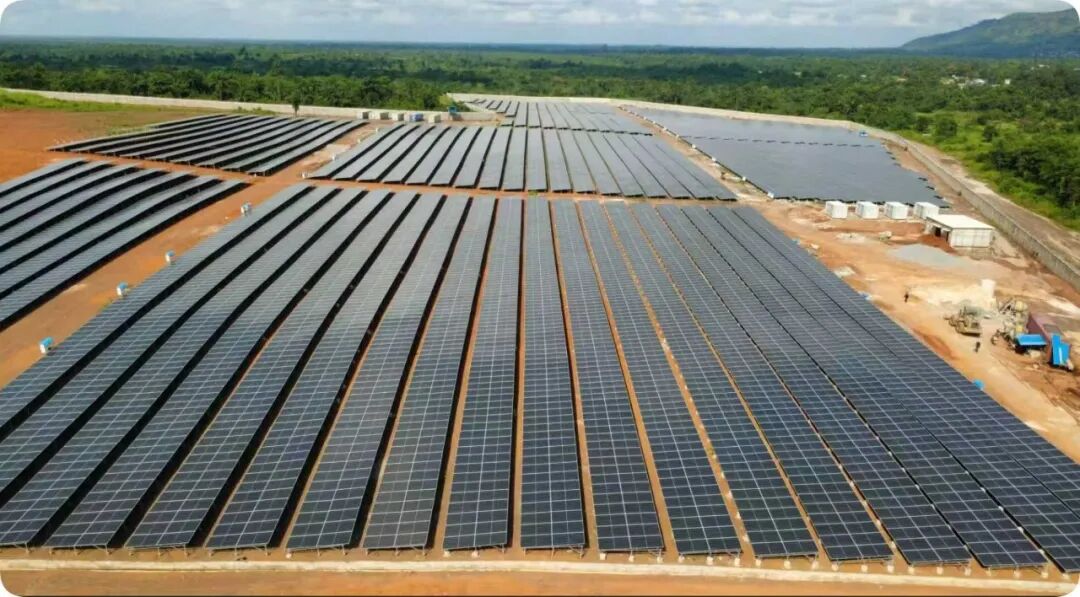
Irradiance and temperature. In West Africa and Southeast Asia, module operating temperatures routinely exceed 60°C, and the power temperature coefficient directly erodes generation. The string voltage window must be back-calculated from open-circuit voltage under extreme heat, or the plant will clip power every summer noon. This is not an optimization — it is the pass line.
Corrosion and dust. For coastal projects in Palau or Sierra Leone, the salt-fog class determines the mounting material, fastener grade and anti-corrosion process; sand and dust in Mongolia and the Middle East determine cleaning cycles and water consumption — both of which feed directly into the O&M budget and the yield curve.
Loads. Snow and wind loads in Mongolia, basic wind pressure in typhoon zones, the structural reserve of the original roof — get any of these wrong and the result is a structural redesign, not a quick reinforcement.
The grid. Voltage level, frequency, interconnection codes, harmonic limits, power factor requirements, reactive power compensation and low-voltage ride-through — standard answers at home, a brand-new question in every country abroad, often without published technical rules.
Permits. Grid-connection applications, environmental permits, roof and land ownership — the length of these processes sets the start point of returns in the financial model.
Get one design input wrong, and every optimization downstream is wrong too.
02 Design fees are about 1% — but they lock in 70% of the cost
There is a rough rule of thumb in the industry: design fees account for only around 1% of total plant investment, yet they lock in more than 70% of the life-cycle cost structure.
✓ A DC/AC ratio set too low leaves inverters idle; set too high, the plant clips at midday and the extra module spend turns into curtailment losses.
✓ Poor string configuration means cabling and mismatch losses that accrue every single day, year after year.
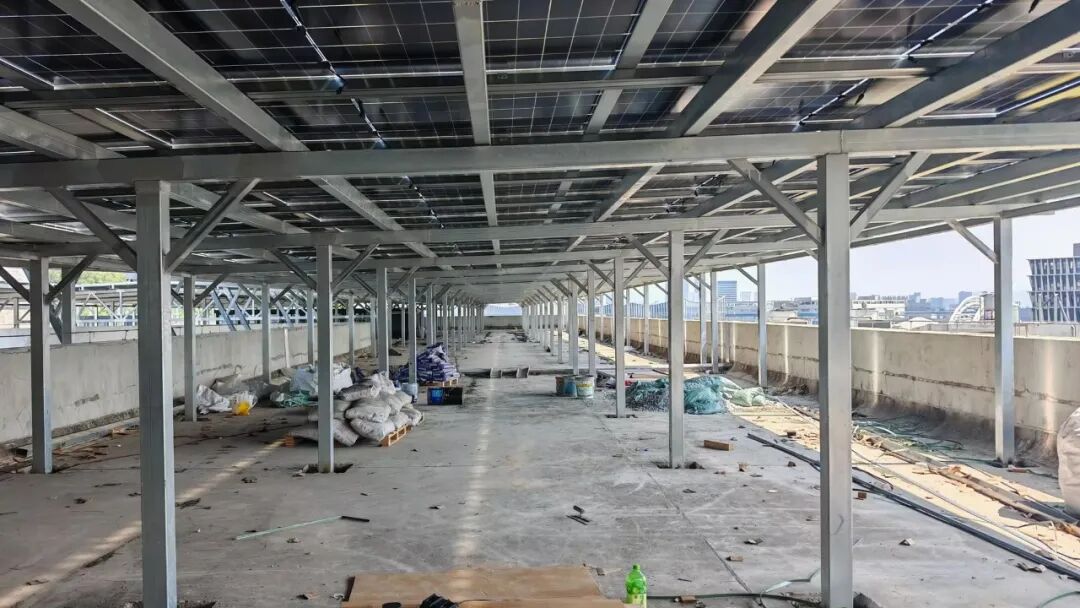
✓ The wrong foundation type — ballast, driven piles or ground screws — can mean an extra month of shipping, another local crane rental, or waiting out a whole rainy season.
✓ The small savings from a thinner cable cross-section are usually paid back double in voltage drop and temperature rise.
None of this is theoretical. Once an overseas project has shipped, rework is priced in “containers + customs + schedule”, not in material cost differences.
03 Design and EPC cannot be two separate companies
Most runaway overseas projects fail not because any party lacks capability, but because information falls through at the interfaces.
The design institute draws to domestic habits, the contractor builds to local practice, and email sits in between; procurement orders from the drawings, the drawings never specify the locally mainstream module format, and the mounting clamps turn out to be a mismatch only after the goods arrive. Overseas, such problems are magnified because the physical distance for error correction is measured in weeks.
The real difficulty of overseas EPC is putting design, procurement, construction and O&M on the same information chain:
Design must understand procurement. What racking is available locally, whether the modules are mainstream formats, whether spares can be sourced locally, and which equipment must ship from China with customs time built in.
Design must understand construction. Local labor skill levels, available machinery, the rainy-season window, camp and logistics conditions.
Design must understand O&M. Cleaning access, maintenance clearance, monitoring and communications. In many countries 4G coverage is unreliable, and monitoring data needs local storage plus satellite or fiber backhaul — decide this after design and it becomes a permanent cost.
A design team that can think through all three at once costs more than one that only draws, but far less than an EPC that keeps redoing work.
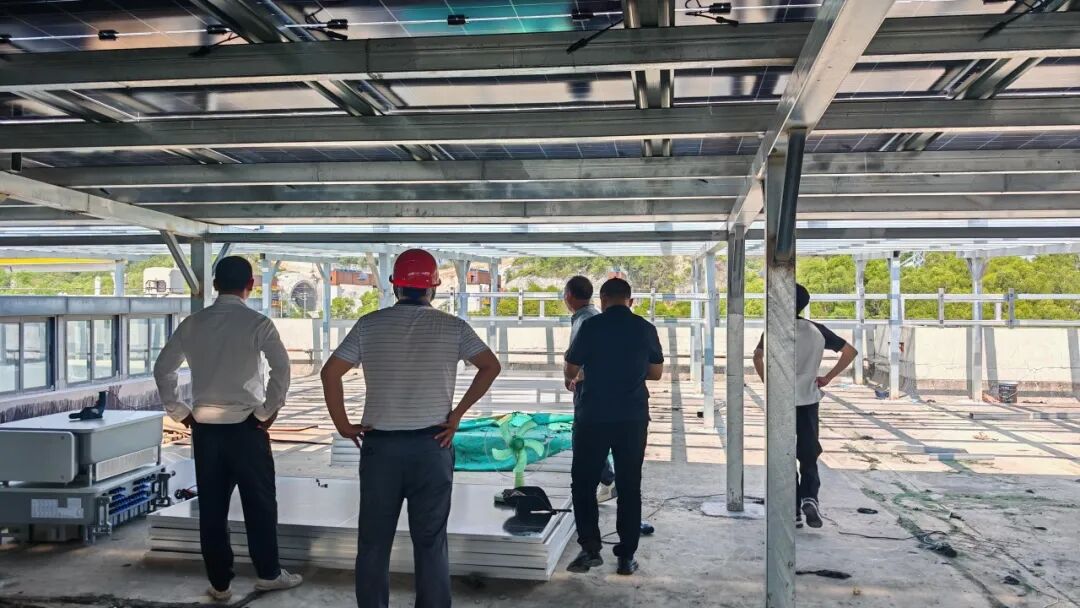
04 What does a company with design as its core capability look like?
KJIsolar (KuaJie Shenzhen New Energy Technology Co., Ltd.) is one sample of this path. Its focus is not module manufacturing but the design, investment, development and construction of solar and storage plants, delivering end-to-end solutions for the commercial, industrial and residential distributed market.
KJIsolar by the numbers: more than 100 dedicated solar designers; 1,200 solar and storage design projects completed in a single year; qualifications including New Energy Design Class B, Power Design Class B and Power Engineering General Contracting Grade 2; a team with 10+ years of experience in wind, solar and storage design, consulting, investment, construction and operation; and four business lines — EPC, procurement, design consulting, and low-altitude infrastructure.
The company’s sequence was design first, engineering second: from 2020, design consulting for power transmission, renewable generation, storage plants, charging stations and wind-solar-storage hybrid projects; from 2022, EPC capability extended to solar, storage, EV charging, small wind, distribution networks and microgrids; from 2024, complete EPC services covering planning, design, construction and operation support.
That sequence matters overseas — drawing capability first, delivery capability second, so the interface is less likely to break.
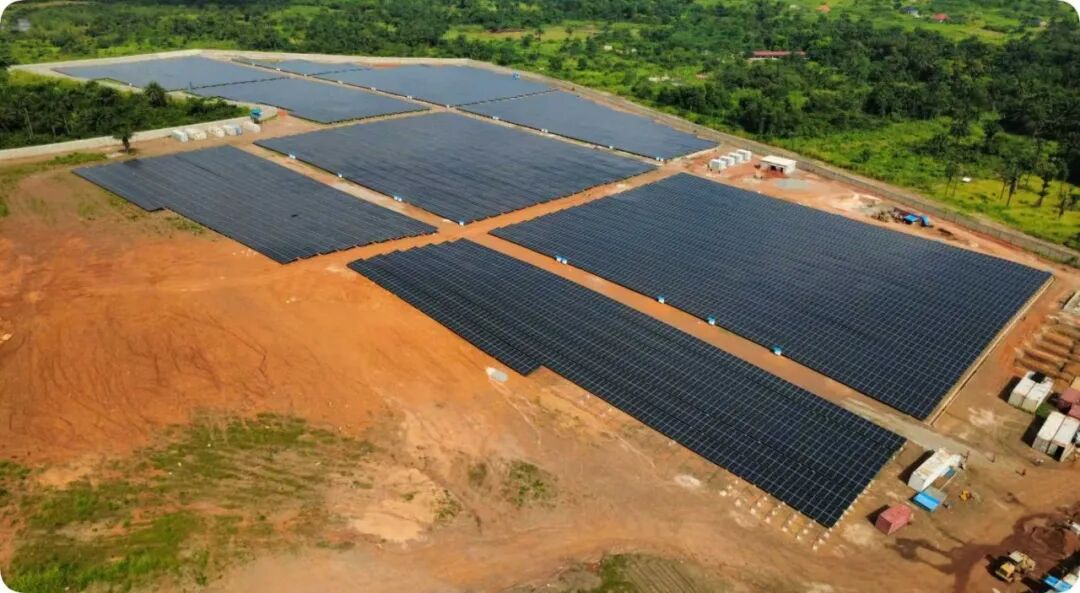
Its overseas track record is concentrated in Africa and Southeast Asia: a 3MW ground-mounted solar project in Chechelege County, Mongolia; a 923kW distributed rooftop project for a plastic packaging factory in Ho Chi Minh City, Vietnam; a 583.75kW distributed solar project for a hotel in Sierra Leone; a primary-healthcare solar project at the Indorama petrochemical park in Nigeria; and a coastal ground-mounted solar project in Palau.
05 Four practical tips for companies going overseas
First, finish the design-input checklist before talking price. Put irradiance, temperature, corrosion class, wind load, snow load, grid parameters and interconnection procedures into a table and confirm them one by one. The earlier the checklist is done, the closer the quote is to real cost.
Second, ask for local grid-connection references, not just domestic track record. A designer who has grid-connected in Vietnam and one who has only done rooftops at home face entirely different risks on the same set of drawings.
Third, move the O&M plan up into the design stage. Cleaning, spares, communications — if these are not arranged at design time, they are all money at O&M time.
Fourth, compare LCOE, not just EPC price. The cheapest quote usually moves the cost into the next twenty years.
Final words
The threshold of overseas solar has never been shipping modules abroad. It is translating a set of engineering capabilities proven in China into the local language, codes and climate. How accurate that translation is — it is already written on the drawings.