Chips Decide the Ceiling of Computing Power, Electricity Decides the Floor

You may have heard this claim: generating a 5-second HD AI video consumes as much electricity as fully charging 10 smartphones. Go one step further — a large data centre running at full load uses as much power in a day as every resident of a small or medium-sized town.
AI is smart, but first and foremost AI is a “power hog.”
And just as everyone frets over chips throttling computing power, something else is quietly happening: solar power plants are becoming the most sought-after asset for internet giants and computing majors.
So let’s talk about what this drama of “computing power chasing solar” is really about.
01 Computing power’s endpoint is electricity
Start with a set of figures from the National Energy Administration:
2025 · 170 billion kWh — total electricity consumption of computing power centres, up 39.5% over the past three years, far outpacing growth in overall electricity consumption.
2030 forecast · 800 billion kWh — about 6% of total electricity consumption across society.
During the 15th Five-Year Plan period, computing power consumption is expected to grow by more than 100 billion kWh a year, reaching 800 billion kWh by 2030, or roughly 6% of total electricity consumption.
One industry taking 6% — and climbing from 1.6% to 6% within a few years. That is a slope the power industry has not seen for a long time.
For data centre operators the problem is even more practical: electricity accounts for about 80% of operating costs.
Buying chips is a one-off expense; paying the power bill burns money every single day. So when a data centre is sited today, the first question is no longer about networks or talent, but about where electricity is cheap, stable and, ideally, green.
02 Why solar in particular
Cheap electricity is not hard to find, but data centres are picky: cost must be low, supply must be stable, and the share of green power must meet the target.
Put all three together and solar is almost tailor-made for computing power.
1 On cost, solar is already among the cheapest sources of power. Solar module prices in China have been driven to the floor in recent years, and in the sun-rich west the cost per kWh has long since fallen to a few tenths of a yuan. For a data centre whose electricity bill is 80% of its costs, that is the lifeline.
2 On policy, green power has become a hard threshold. The National Data Administration has drawn the line: newly built data centres at hub nodes must source no less than 80% of their power from green energy. Translated: if you want to build a data centre, first prove you have green power.
3 On space, solar and data centres are a natural pair. Solar bases sit in the deserts and gobi of the northwest, where land is cheap and sunlight is abundant; the “East Data, West Computing” hubs happen to be in exactly those places. One lacks load to absorb its output, the other lacks cheap green power — a supply and demand mismatch that fits perfectly.
03 The land grab: projects already delivered
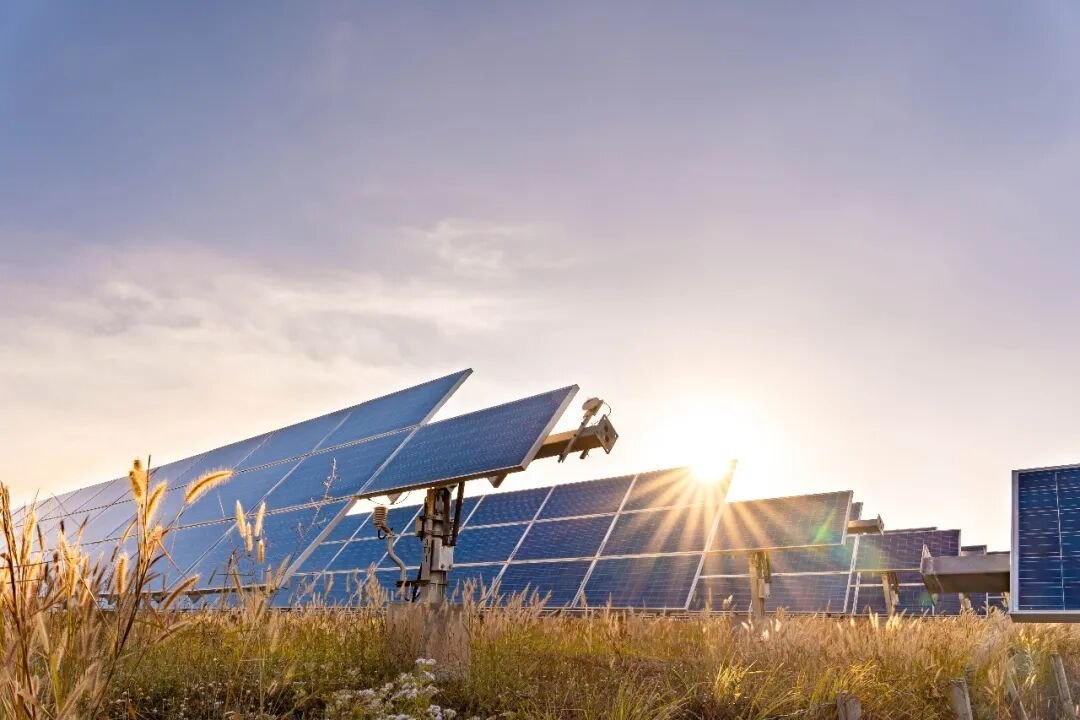
This is not a story on a slide deck. These are projects that are already generating power into the grid.
Zhongwei, Ningxia
China Datang’s 500 MW solar plant is now in operation. The distinctive part: its output does not go into the public grid but travels over a dedicated line straight into a nearby computing park. Once fully built, annual generation can cover 2.29 billion kWh of demand from the Zhongwei cloud base data centres, and a supporting 1.5 GW wind project will reach full capacity within the year.
Horinger, Inner Mongolia
China Huadian’s 860 MW green energy demonstration project is in operation, with 80% of its power supplied directly as green electricity and a long-term target of 100%, traceable to source. The National Data Administration named it an outstanding case of the national integrated computing power network.
Kubuqi Desert
State Power Investment Corporation has launched a 6 GW clean energy base in the Kubuqi Desert under a power-computing coordination scheme, supplying the Ordos cloud computing industrial park. Generation, storage and computing capacity are packaged as one.
Envision Chifeng / Shanghai Lingang
The Envision Chifeng zero-carbon industrial park delivered the industry’s first data centre running on 100% direct green power, cutting overall energy costs by more than 40%. Shanghai Lingang built the world’s first “direct offshore wind” subsea data centre, with a green power supply rate above 95%.
See the point? Solar plants have moved from being “assets that generate power and sell it” to being “upstream raw material for the computing power industry chain.”
04 Policy has paved the way
If projects are the market running, policy is the government building the road. Over the past year or so, several key documents have arrived in quick succession:
Document No. 650
The Notice on Orderly Promoting the Development of Direct Green Power Connections defines, for the first time at national level, how direct green power connections are built and managed, filling a policy gap.
Document No. 1192
It refines the pricing mechanism and sets out transmission and distribution tariff rules for local consumption projects, making the numbers add up.
Document No. 688
It upgrades direct green power connections from “one-to-one” to shared “one-to-many” arrangements, and gives explicit priority to emerging industries such as computing facilities.
15th Five-Year Plan for Building a New Energy System
It writes in eight words: “strengthen computing with electricity, promote electricity with computing.”
Using mainly green power for computing power is a direction written into policy — not an option.
05 What it means for the solar industry
Back to the solar industry’s own perspective, this may matter more than the numbers themselves.
Over the past two years the industry’s keyword has been “involution”: polysilicon prices below the cost line, module prices on the floor, companies growing revenue without growing profit. Everyone has been asking: where is the new demand?
Computing power has given a neat answer.
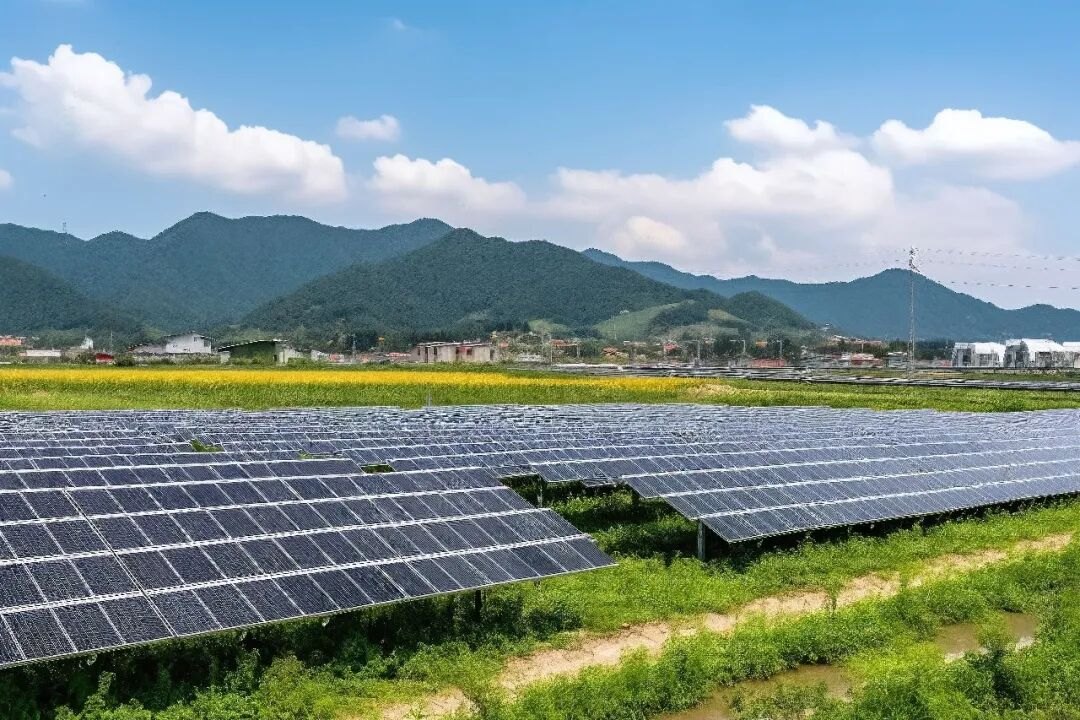
As of the end of July this year, China’s installed solar capacity had reached 1.286 billion kW, overtaking coal power for the first time to become the country’s largest source of installed capacity. The base is big enough; what matters next is not “how much to install” but “where the power goes and who buys it.”
Computing power happens to be the perfect buyer: huge consumption, a relatively stable and predictable load, and a willingness to pay a certainty premium for green power.
The head of weather modelling at Envision Energy expects AI data centres to become the main source of demand for renewable energy.
Better still, this logic keeps upgrading —
Solar depends on the weather and is intermittent; computing power cannot lose supply for a second and is a rigid demand. Storage stitches the two together: cheap green power is banked when solar output peaks and released at night, while data centres learn to “order according to the tariff” — computing more when power is cheap and less when it is expensive.
The industry has a name for it: “computing follows power, power adjusts to computing.” Solar has evolved from one-way power sales into an integrated local energy system of source, grid, load, storage and computing.
Closing words
The AI story has been told for so long, and so has the GPU story, but the truly scarce resource always comes back to the oldest question: where does the electricity come from?
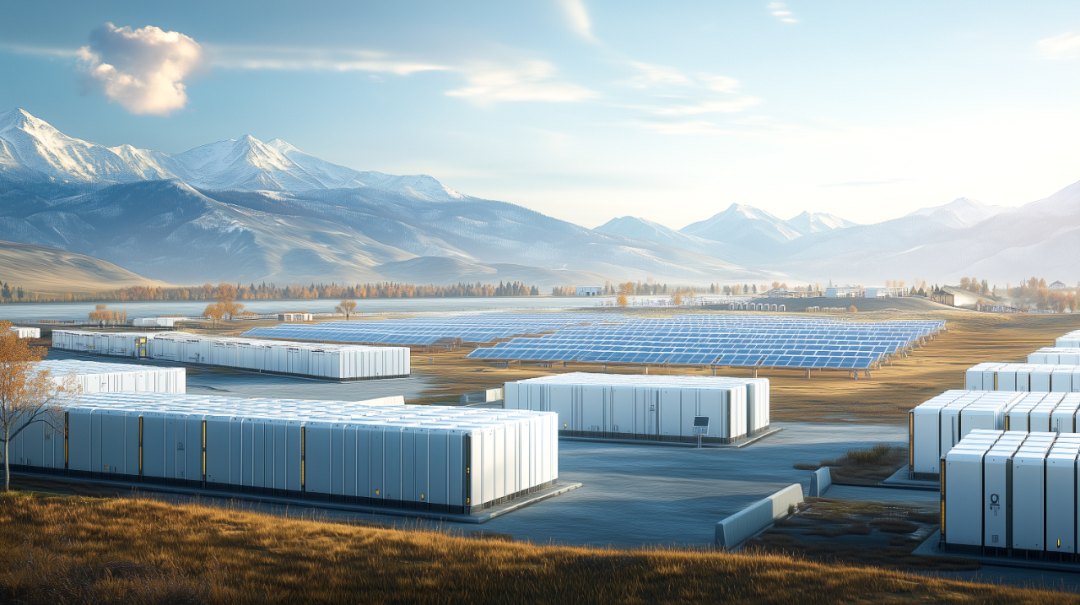
Interestingly, the answer this time is no longer coal mines and power plants, but rows of solar panels across the desert, turbines that never stop turning on the gobi, and endless ranks of battery containers.
Chips decide the ceiling of computing power; electricity decides the floor. And solar is becoming the hardest-core “infrastructure of infrastructure” of the AI era.